
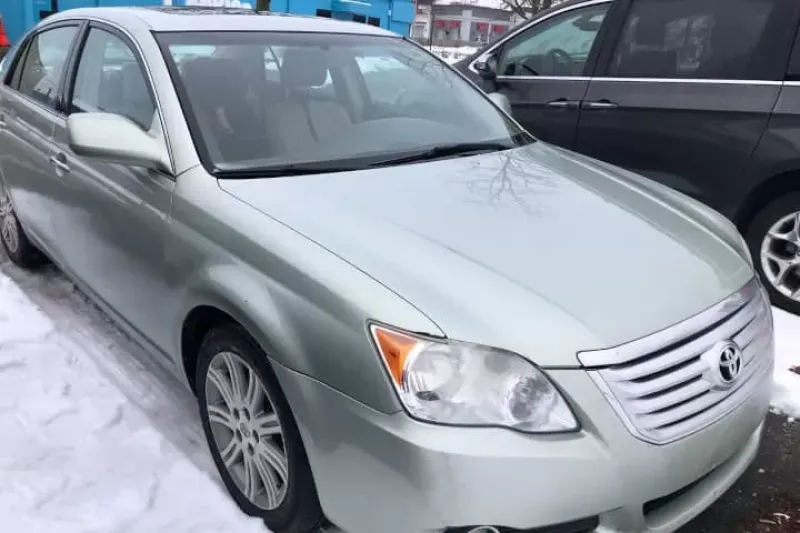
2008 Toyota Avalon came to our Toyota repair shop in Ann Arbor with concern about poor brake performance. A comprehensive brake inspection found all brake caliper slides were rusted and seized, dragging brake pads, worn-out brake pads, all contributing to the poor brake performance. A complete front and rear brake replacement was performed with a brake fluid flush and replacement.
Case Study Summary
A case study of poor brake performance on a Toyota Avalon revealed several distinct mechanical and hydraulic brake system issues. The most prominent finding was a lack of regular vehicle maintenance and the necessity for annual brake system inspections, especially in highly rust-prone areas where this vehicle was operated.
Case: 2008 Toyota Avalon – Poor Brake Performance
A significant case of poor braking performance was reported by the vehicle owner, leading to front and rear brake repairs.
The Issue: Brake stopping ability was significantly degraded, with reports of a “spongy” pedal feel.
Performance Impact: The vehicle owner experienced a noticeable change in brake pedal feel and a gradual loss of stopping power over time. Vehicle owner described the brake performance as "scary".
Cause: Lack of brake maintenance, rusted brake components, and vehicle age.
The Fix: Replacement of front and rear brake pads, rotors, calipers, and brake fluid.
In This Article
Summary
Diagnosis
Inspection
Repair
Cost
Cause
FAQ
Tips
Recommended Brake Shop in Ann Arbor
Brake Problem Diagnosis
Our Toyota brake technician took this 2008 Toyota Avalon for a test drive to check the customer's concern that the brakes were not working correctly. Our technician found the brake pedal almost went to the floor before the brakes engaged and needed to be pumped twice to fully activate the brakes. Even with maximum pressure applied to the brake pedal, the brakes did not have much stopping power and produced a grinding noise at the rear of the vehicle.
Brake Inspection
A full front and rear wheels-off brake inspection found that each wheel had uneven wear between the inner and outer brake pads, indicating seized brake caliper slides.
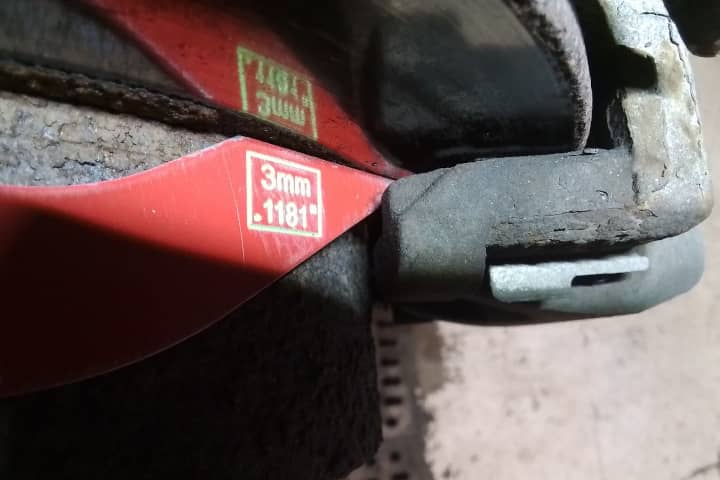
The front brakes had a 2mm difference between the inner and outer brake pads, and the rear brakes had a 4mm variance between the inner and outer pads.
Seized brake caliper slides do not allow the caliper to float and center the brake pads on the rotor. One brake pad does most of the braking and causes uneven brake pad wear. A seized brake caliper can also cause dragging brakes and poor fuel mileage. Seized or sticking brake calipers can also require the driver to pump the brakes to make them apply.
The inboard brake pads on both front and rear brakes were at or near the discard thickness. One rear pad was grinding metal to metal on the rotor. This brake problem is caused when the caliper slides become rusted and can not slide freely so that the braking power is applied evenly to both brake pads. When the caliper cannot slide on its mounting frame, the inner brake pad, which the caliper piston pushes against, receives the majority of the braking pressure, which prematurely wears the inner pad.
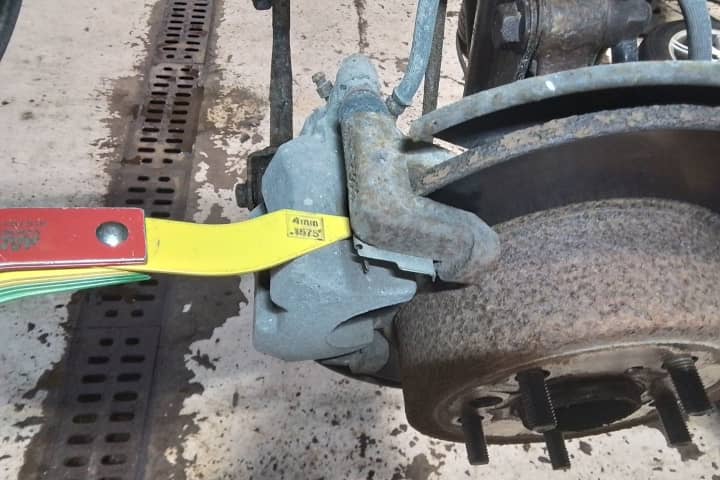
All brake rotors needed to be replaced. The rotors had rust buildup from the outer brake pads not contacting the rotor and were also worn close to the minimum thickness. One rear rotor was damaged by the metal-to-metal contact with the worn-out brake pad.
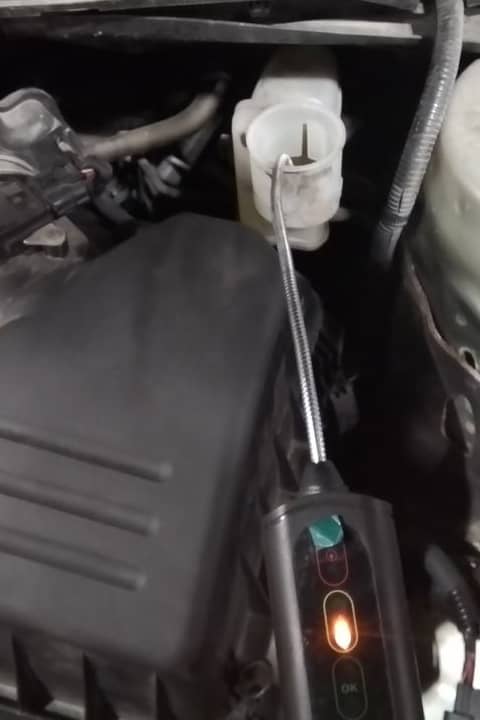
The brake hoses looked very old and could be the original hoses. The brake fluid looked very old and contaminated. A brake fluid condition test showed 3% moisture contamination. A brake fluid moisture level of 2% or more will damage internal brake parts and ABS system components. The brake fluid should be flushed and replaced with new brake fluid.
The customer was informed that the brake problem was dangerous and would persist until the brake system was repaired. We recommended a complete brake service, including replacing the front and rear brake pads, brake rotors, brake calipers, brake hoses, and a brake fluid flush and replacement. A detailed inspection report with photos was sent to the customer including a detailed estimate. The customer approved the brake repair estimate and we got to work!
Brake Repair
We did a front brake service with re-manufactured calipers, new brake pads, new rotors, and new brake hoses, a rear brake service with re-manufactured calipers, new brake pads, new rotors, and new brake hose, and a brake fluid flush and replacement.
Quality re-manufactured brake calipers were chosen because they provide good value compared to rebuilding the calipers in our shop or buying new calipers. Re-manufactured calipers also come pre-assembled with new brake pads, which saves on labor. Also, if the vehicle brake fluid has not been changed in a long time, the calipers can have significant hidden internal corrosion and cost more for us to rebuild than when factory re-manufactured calipers are used.
First, the brake hydraulic system is flushed with new brake fluid. The new fluid clears the old brake fluid from the master cylinder, ABS control valve, ABS pump, combination valve, metering valve, proportioning valve, and lines to each wheel. Doing this first keeps the old brake fluid from contaminating the new brake calipers and brake hoses. Once the new brake parts are installed, the hydraulic system is bled to fill the new calipers and purge any air from the system.
Next, our brake specialist removed the old brake calipers, brake pads, brake hoses, and brake rotors on both the front and rear axles. The axle hubs were cleaned and inspected for damage where the brake rotor mounts. The wheel stud threads are checked for damage which would prevent the wheel from being tightened to the rotor and hub and prevents brake vibration. The most common cause of brake vibration and shimmy is an unclean caliper mounting surface or damaged wheel studs.
Then, the brake caliper mounting frame is cleaned and inspected for thread damage. Once the new calipers are mounted on the hubs, the caliper mounting frames are installed and the retaining bolts were tightened. New brake hoses were installed onto the new re-manufactured calipers. The new calipers with brake pads are placed on the new brake rotors and bolted to the caliper frame. The brake hoses are then attached to the steel brake lines and the final brake fluid bleeding is done.
After a final quality control check the wheels are installed and wheel nuts torqued to specification. A final test drive was done to break in and seat the new brake pads and check that the brakes performed correctly. The driver can now use the vehicle without worrying about being able to stop!
Brake Repair Cost
Advertised brake service prices vary greatly. The difference comes from a wide range in the quality of the replacement parts, the skill of the technician, the quality of the work performed, having up-to-date brake repair equipment and tools, and the guarantee provided if there is a problem. Of all the different auto services available, brake repair has the most serious safety consequences. Is brake repair something you want to cut corners on?
Certified quality replacement parts, either new or re-manufactured, simply cost more. But they almost always have a longer life which means greater value for the cost. Quality parts also fit properly, perform better, and have fewer warranty problems.
Doing correct, quality brake service takes more time and so costs more. To do a correct brake repair, the technician needs to be experienced and have current training on the best brake service methods. Having your brake repair performed by a certified and licensed technician ensures safe brake performance. But highly skilled technicians who can do safe, quality brake service cost more to hire.
The equipment and tools a brake repair shop has makes a big difference in the quality of the brake service they do. Having good brake repair equipment is expensive. Every year new brake repair equipment must be upgraded or replaced to allow work on newer vehicles. It is a large investment that allows us to provide high-quality brake service.
Quality brake service has very few problems and warranty problems. But if you do have a problem, we will make it right with no argument.
Brake Problem Cause
The seized brake caliper problem is usually caused by the previous brake service. With low-price brake repair, the brake pads are often replaced with no cleaning or lubrication of the calipers. If the caliper slides are not cleaned and lubricated when the brake pads are replaced, the caliper slides often seize before the brake pads need their next replacement.
A seized caliper causes one brake pad to do most of the braking and suffers premature, rapid wear of a single pad. This greatly shortens the life of the brake pads and results in a short brake life and very poor value!
The seized caliper problem could have been prevented with periodic brake inspections where a good technician would have noticed this problem and recommended lubricating the caliper slides and getting maximum life from the brake pads.
Brake Repair FAQ
Q: How do I know when my Toyota Avalon needs new brake pads?
A: Common warning signs include squealing or grinding noises while braking, a longer stopping distance, or vibration in the brake pedal or steering wheel when you slow down. If pad thickness drops to about 3 mm or less, replacement is recommended even if you don’t notice symptoms yet.
Q: How long do brake pads typically last on a 2008–2012 Toyota Avalon?
A: Most Toyota Avalon owners can expect brake pads to last between 30,000 and 70,000 miles, depending heavily on driving habits and traffic conditions. Frequent hard stops and city driving will wear pads toward the lower end of that range.
Q: How often should I have the brakes inspected on my 2008–2012 Toyota Avalon?
A: As a best practice, have your brakes inspected at least once a year or every 10,000–15,000 miles, whichever comes first. More frequent checks are wise if you drive mostly in stop‑and‑go city traffic, in hilly areas, or do a lot of highway commuting with sudden slow‑downs.
Q: How often should the brake fluid be changed in a 2008–2012 Toyota Avalon?
A: A good rule of thumb is to change brake fluid about every 2–3 years, or around 20,000–40,000 miles, even if you don’t notice a problem. Especially in Ann Arbor's humid continental climate. Brake fluid absorbs moisture over time, which can lead to internal corrosion and a soft pedal feel, so regular fluid service is an important part of safe braking.
Q: Why do some Toyota Avalon brakes wear out faster than expected?
A: This generation of Toyota Avalon is a relatively heavy, powerful sedan, so the brakes work harder than on smaller vehicles. Short trips, constant stop‑and‑go traffic, aggressive braking all accelerate brake pad wear. Choosing quality brake pads and allowing more coasting time before stops helps reduce premature wear.
Q: How can I extend the life of my Toyota Avalon brakes?
A: You can extend brake life by braking smoothly, leaving extra following distance, and anticipating traffic so you coast more and brake less aggressively. Avoid resting your foot lightly on the brake pedal while driving, and have the brake system inspected regularly so small issues don’t turn into expensive repairs.
Q: Is it better to resurface or replace brake rotors on Toyota Avalon?
A: For most 2008–2012 Avalon, replacing rotors is usually the best practice once they are worn or warped, because these rotors are relatively thin when new. Resurfacing removes material and can quickly take them below safe limits; new rotors provide a fresh, even surface for the new pads and help prevent future vibration.
Q: When should the brake rotors be replaced on a 2008–2012 Toyota Avalon?
A: Brake rotors should be replaced when they are worn below the manufacturer’s minimum thickness, are deeply grooved, or cause noticeable pulsation or vibration when braking. A brake repair shop will measure rotor thickness and inspect the surface as part of a standard brake condition evaluation.
Q: Is it safe to drive if the brake warning light is on?
A: A red brake warning light should be treated as an urgent issue, because it can indicate low fluid, a system leak, or that the parking brake is partially engaged. An ABS light alone usually means the anti‑lock function is disabled but basic braking still works; in both cases, you should minimize driving and have the system inspected as soon as possible.
Q: Why does my Toyota Avalon steering wheel or brake pedal shake when I brake?
A: Shaking or pulsation when braking usually points to brake rotor issues, such as thickness variation or warping. While it doesn’t always mean an immediate failure, it is a sign that the brake system needs attention; best practice is to have the rotors measured and replaced if they’re out of spec rather than ignoring the symptom.
Q: Why do my Toyota Avalon brakes squeal even after recent service?
A: Occasional light squeal can come from dust, moisture, or the pad material itself and is not always dangerous. Persistent or loud squealing, especially under gentle braking, can indicate poor pad quality, lack of proper hardware or lubrication, or glazing on the pad and rotor surfaces, and is worth getting a brake inspection.
Q: What’s the difference between OEM and aftermarket brake pads for my Toyota Avalon?
A: Toyota Original Equipment Manufacturer (OEM) brake pads are designed to match the original feel, noise level, and performance that Toyota intended, often prioritizing smooth, quiet operation. Quality aftermarket brake pads can offer longer life, less dust, or more aggressive stopping power. However, very cheap brake pads can be noisy, wear quickly, and cause rotor issues. Good quality brake pads provide the best long term value.
Q: Do I need to replace brake hardware when I replace pads and rotors?
A: Replacing or cleaning brake hardware such as pad clips, shims, and lubricated slide pins is considered best practice during a brake job. Fresh hardware helps the pads move freely, reduces noise, and promotes even wear, which ultimately protects your investment in new brake pads and rotors.
Q: Is it okay to replace only the front or only the rear brakes?
A: Yes, it’s acceptable to replace only the front or only the rear brakes if the other axle still has plenty of life and is functioning normally. However, both wheels on the same axle should always be serviced together to maintain balanced braking and even wear side‑to‑side.
Q: How do I know if my 2008–2012 Toyota Avalon has a brake fluid leak?
A: Signs of a brake fluid leak include a spongy brake pedal, visible clear or yellowish fluid near the wheels or under the engine bay, and a low brake fluid warning light. Brake fluid leaks commonly come from worn caliper seals, cracked brake lines, or a failing master cylinder, and should be repaired immediately because they directly affect stopping ability.
Q: Can a warped rotor on a 2008–2012 Toyota Avalon be dangerous?
A: Yes. A warped brake rotor creates uneven brake pad contact, causing brake pedal pulsation, steering wheel vibration during braking, and inconsistent stopping force. On a heavier vehicle like the Avalon, this is a genuine safety risk and can lead to longer stopping distances, so warped rotors should be addressed promptly.
Q: What are the signs of Toyota Avalon with low or old brake fluid?
A: A soft or spongy brake pedal, poor brake performance (longer stopping distance), or a brake warning light can indicate low brake fluid level or degraded fluid. Dark or dirty fluid in the reservoir is another clear sign that a brake fluid service is due, even if the brakes still feel normal.
Brake Repair Tips
- If your brakes don't feel or sound normal, get a brake inspection as soon as possible. Visit our shop or phone us and we can quickly tell you if your vehicle is safe to drive. If the brake stopping performance is poor have your vehicle towed to our shop for a brake inspection.
- Get an annual brake inspection. As part of our oil change service, we do a digital multi-point vehicle inspection with photos of any found problems that would flag problems, such as the need for a brake caliper lubrication service. Catching and repairing a brake caliper problem early can greatly extend the life of brake pads and postpone an expensive brake service. Brake caliper lubrication service is inexpensive compared to a complete brake repair.
- Flush and replace the brake fluid every two years or when brake fluid moisture reaches 2% or greater. Brake caliper pistons can also seize internally when the brake fluid is not flushed and replaced. The moisture contamination in the old brake fluid causes the brake caliper piston to corrode and stick in the caliper housing. This brake problem usually causes lower overall brake performance and increased brake drag when the corroded caliper piston doesn't retract when the brakes are released. The brake pads drag on the brake rotors, overheat, and rapidly wear out.
Hoover Street Auto Repair provides high-value brake repair service in Ann Arbor, MI, for all Toyota models. We believe in quality, safe brake repair at the best value price. We are a Japanese auto repair specialist and provide brake service for all makes and models of cars and light trucks.